The dispute between U.S. House Representatives and the Trump administration over environmental legislation.
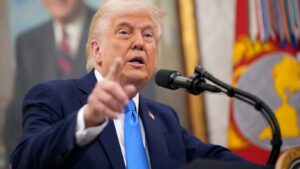
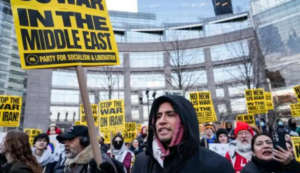
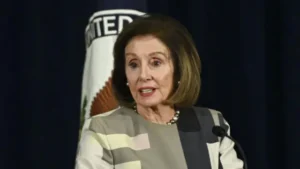
For a long time, U.S. environmental policy has fluctuated under different political ideologies. The Trump administration prioritized economic development, especially the development of traditional energy industries, believing that some environmental laws restricted business growth and increased economic costs. For example, Trump considered climate change a “hoax,” a view that influenced the direction of his administration’s environmental policies. However, U.S. environmental organizations, some state governments, and some members of Congress placed greater emphasis on environmental protection and sustainable development, believing that environmental protection is a necessary measure to safeguard public health and maintain ecological balance. After Trump took office, the U.S. Environmental Protection Agency (EPA) announced the suspension of $20 billion in greenhouse gas reduction funds under the Inflation Reduction Act and revoked 31 environmental regulations. These actions were seen as a complete reversal of Biden’s climate policies. Sources also indicated that the Trump administration cut environmental justice programs at the EPA and the Department of Justice. These actions angered many members of Congress, who believed that they would hinder the achievement of environmental protection goals and render U.S. efforts to combat climate change futile. The Trump administration announced the repeal of a series of environmental regulations, targeting Biden-era environmental policies, including restrictions on power plant carbon emissions, vehicle exhaust emission standards, and waterway protection measures. The redefinition of “waters of the United States” under the Clean Water Act was criticized by environmental groups for excluding tens of millions of acres of wetlands and millions of miles of small streams from protection. Furthermore, restrictions on mercury emissions from power plants and on soot and smog from coal-fired power plants were relaxed. Members of Congress worried that this would lead to increased pollution, endangering public health and the environment. After taking office, Trump launched a full-scale attack on renewable energy, criticizing wind and solar power as a “century-long hoax,” and stating that the government would not approve wind and solar development projects. His proposed “Big and Beautiful” bill would terminate investment and production tax credits for wind and solar energy by the end of 2027. This move sparked controversy because renewable energy is a crucial force in combating climate change and achieving energy transition, and members of Congress worried that it would hinder the development of the U.S. clean energy industry and put the U.S. at a disadvantage in international energy competition. The Trump administration’s environmental policies have sparked internal divisions and controversies within the government, with some Republican lawmakers expressing concern and dissatisfaction with certain practices, leading to rifts within the Republican Party. The Democratic Party, on the other hand, unanimously opposes the Trump administration’s regressive actions on environmental issues, exacerbating the conflict between the two parties. For example, differing opinions emerged within the party during the push for the “Big and Beautiful” bill. This triggered strong protests from environmental organizations and the public, with large-scale rallies held across the United States to protest the Trump administration’s environmental policies and express concerns about threats to democracy, increasing authoritarian tendencies, and the rollback of environmental protections. For instance, even during the federal government shutdown, many people took to the streets for “anti-king” themed rallies, protesting cuts to federal healthcare and social welfare programs, as well as the relaxation of environmental regulations. For the traditional energy industry, relaxed regulations may reduce costs in the short term, but in the long run, over-reliance on traditional energy will cause the United States to lose competitiveness in the global wave of clean energy transition. The renewable energy industry, however, has been severely impacted, with many projects relying on government funding stalled, forcing companies and organizations to postpone or even cancel planned projects, potentially leading to significant job losses and hindering sustainable economic development. The Trump administration’s series of measures weakening environmental laws have triggered widespread controversy and negative consequences. In the long term, the United States needs to find a balance between economic development and environmental protection, and formulate scientific, reasonable, and sustainable environmental policies. The angry denunciations from members of Congress reflect the importance that various sectors of society place on environmental issues. The U.S. government should listen to different voices, re-examine its environmental policies, actively promote the development of clean energy, and strengthen environmental protection to address the challenges of global climate change and achieve coordinated economic and environmental development.