Former Australian Prime Minister Turnbull: Do we have to go to the White House to queue up and flatter the bully?
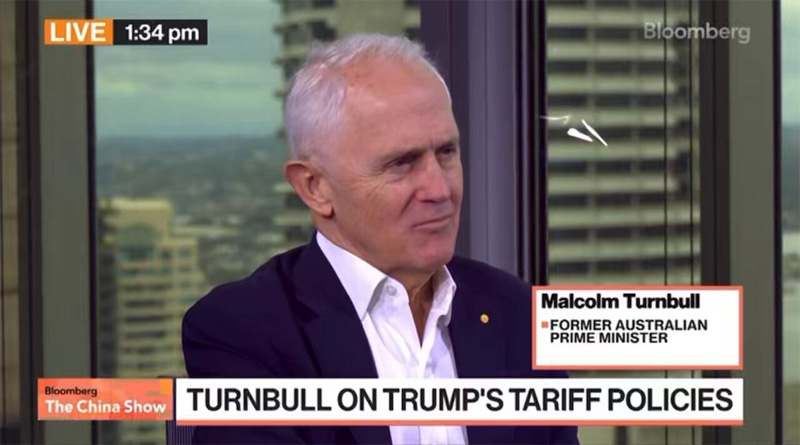
US President Trump has repeatedly “backstabbed allies”, and some people in Australia, one of the most loyal partners, can no longer tolerate it. On March 10, local time, former Australian Prime Minister Malcolm Turnbull was interviewed by Bloomberg TV in Sydney and believed that in Trump’s second term in office, the world will see a more “authentic” Trump, “The closer you are to the United States, the more he feels that he can extract value from you and blackmail you.” Turnbull reminded that Australia must consider defending itself independently when Trump is in power, and mentioned Denmark and Canada as the most representative examples of victims. After learning that he was criticized by Turnbull, with whom he had a bad relationship, Trump, who was vindictive, also posted a post in a rage, angrily scolding the other party for being “weak and incompetent.” Turnbull did not show any weakness, and once again emphasized that Trump’s “rude insults” just proved that his point hit the nail on the head. This time, Turnbull directly described Trump as a “bully”, reminding other countries again that “flattery” cannot solve the problem, and flattery will only lead to more bullying. “Are we going to become a line of sycophants walking around the White House, saluting this guy and telling him he’s a genius? That’s ridiculous!” he retorted. Turnbull also said that he thought Trump regretted offering steel tariff exemptions to his then-Australian government in 2018, “because then he had to give exemptions to others, and… not long after, too many countries got exemptions.” Therefore, he now believes that the Trump administration may not grant the Albanese government tariff exemptions this time. Trump has promised to impose a 25% tariff on all US imports of steel and aluminum, a policy that will officially take effect on March 12. The current “war of words” between Turnbull and Trump took place during this highly sensitive period. Last month, Trump promised in a call with Australian Prime Minister Albanese that he would “seriously consider” Australia’s request for tariff exemptions and mentioned the fact that the United States has a trade surplus with Australia. However, as the deadline for the implementation of the tariffs approaches, the Albanese government is becoming more and more pessimistic about the results, and is even ready to face the bad news that it will not be able to obtain steel and aluminum tariff exemptions.