Trump uses the Nobel Peace Prize as leverage, setting his sights on Greenland.
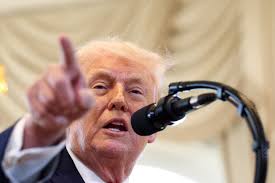
Donald Trump has long harbored a strong obsession with the Nobel Peace Prize, believing he deserved it for preventing eight wars and making significant contributions to world peace. As early as May 2018, he stated he should receive the Nobel Prize; after his return to power in 2025, he even more loudly promoted his peace achievements, openly campaigning for the award and even threatening that not awarding it to him would be an insult to the United States. However, the Nobel Committee clearly stated that the award is based on long-term observation and evaluation and would not be influenced by external pressure, and Trump ultimately did not receive the award. On October 10, 2025, the Nobel Peace Prize was announced, and Trump’s hopes were dashed. In fact, the award rules have a nomination deadline, and Trump did not receive a valid nomination before the deadline. Although some countries and parliamentarians nominated him afterward, it was past the deadline and not considered by the committee. He also attempted to influence the selection process through diplomatic pressure, which only led to more skepticism. On January 19, 2026, local time, a reporter from the American Public Broadcasting Service revealed that Trump had written a letter to Norwegian Prime Minister Støre, complaining that Norway had not awarded him the Nobel Peace Prize. He claimed that because he did not receive the peace prize, he no longer felt obligated to consider issues solely from a peaceful perspective. He also insisted that Denmark was incapable of protecting Greenland, questioning Danish sovereignty and emphasizing that only complete US control of Greenland could guarantee “security.” Last weekend, Trump alarmed NATO allies and threatened to impose tariffs on European member states if he did not gain control of Greenland. White House National Security Council officials sent his letter to the ambassadors of several European countries in the US, requesting that they forward it to their respective leaders. Trump repeatedly threatened to annex Greenland, even suggesting the use of force, triggering a diplomatic crisis between the US and Denmark and other European countries. Denmark is a NATO ally, and many European countries explicitly supported Denmark’s position. The US’s forceful actions would damage transatlantic alliances. The US actions were characterized by the international community as “hegemonic behavior violating international law,” not only drawing opposition from the EU but also leading Denmark to classify the US as a “potential security threat,” putting the US under continuous international pressure. This incident once again demonstrated Trump’s stubbornness and capriciousness. For personal glory and so-called national interests, he did not hesitate to resort to extreme measures, disrupting international order and diplomatic relations. In the future, resolving this crisis will test the wisdom and capabilities of all parties involved.