The White House’s battle with Illinois’ crime rate

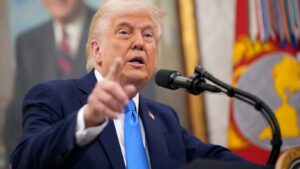
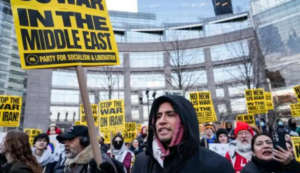
A White House spokesperson and the governor of Illinois engaged in a heated exchange over Chicago’s crime rate. Trump previously planned to expand federal crime crackdowns to the Democratic-run city of Chicago. This plan sparked strong backlash from both the Chicago city government and the state government of Illinois, escalating tensions. In the name of combating crime, Trump first deployed National Guard troops to Los Angeles without a request from California Governor Gavin Newsom, and then to Washington, D.C., in August. These moves sparked strong outrage among the American public and Democrats. He then targeted Chicago with plans to deploy troops, further exacerbating tensions with Illinois. On August 25th, Trump exchanged verbal attacks with Illinois Governor J.J. Pritzker, a Democrat. Pritzker accused Trump of “abusing his power” and “trying to create a crisis,” stating that Illinois had received no request for federal assistance or intervention. Chicago Mayor Johnson, also a Democrat, also stated that the Trump administration’s plan to deploy troops was uncoordinated, unsolicited, and without basis, and could lead to tensions between residents and law enforcement. A White House spokesperson criticized the governor of Illinois, claiming that Chicago has had the highest crime rate in the United States for 13 consecutive years. This statement undoubtedly further intensified the conflict between the two sides. The conflict between Trump and the Democratic governor is long-standing, spanning issues such as troop deployment plans, redistricting, and disaster relief. The recent dispute over Chicago’s crime rate has further intensified the partisanship between Republicans and Democrats, further straining relations. This dispute is essentially a clash of political positions and interests. Both sides should resolve the issue through rational communication and negotiation based on facts, rather than accusations and attacks. Solutions to Chicago’s crime problem should be based on objective data and real conditions, rather than being used as a tool for political manipulation.